About
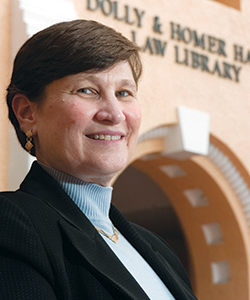
Professor Ellen S. Podgor is the Gary R. Trombley Family White Collar Crime Research Professor and Professor of Law at Stetson University College of Law. She is a former deputy prosecutor and criminal defense attorney, who teaches and writes in the areas of White Collar Crime, Criminal Law, Criminal Procedure: Adjudication, Ethics, and Computer Crimes. She is the lead author of the Hornbook on White Collar Crime. Her bio can be found HERE and her SSRN page HERE.Contact Me
Ellen S. Podgor-
The U.S. District Court for the District of Columbia held – “When the Government violates the Fourth Amendment’s prohibition on unreasonable searches and seizures by sweeping up a broad swath of a person’s electronic files, retaining those files long after the relevant investigation has ended, and later sifting through those files without a warrant to
-
The old saying that “a grand jury would indict a ham sandwich” is true – a motivated prosecutor can usually get a grand jury to indict pretty much anyone. In a grand jury a prosecutor can present hearsay evidence, uncorroborated testimony, and a single law enforcement officer to speak the entire case to the jurors
-
Despite a “not guilty” following a trial, Roger Clemens did not make the Hall of Fame today. He had been charged with perjury, making false statements, and obstruction of Justice. Despite a “not guilty” finding of multiple counts at trial, and a reversal on appeal of the one remaining count of obstruction of justice, Barry
-
DOJ, Department of Justice Releases 2025 Annual Report to Congress on Efforts to Combat Elder Fraud and Abuse Emily Bazelon & Rachel Poser, The Unraveling of the Justice Department Sixty attorneys describe a year of chaos and suspicion, NYTimes, Nov. 16, 2025 DOJ, Corporation and Former Chief Executive Officer Sentenced for Health Care Fraud and
-
ABA Criminal Justice Standards: Prosecution Function – Standard 3-1.6 Improper Bias Prohibited(a) . . . A prosecutor should not use other improper considerations, such as partisan or political or personal considerations, in exercising prosecutorial discretion. . . Standard 3-4.4 Discretion in Filing, Declining, Maintaining, and Dismissing Criminal Charges(b) In exercising discretion to file and maintain
-
My recent Essay, Prosecutorial Discretion Is Grounded in Law, 30 Berkeley Journal of Criminal Law 224 (2025), examines prosecutorial discretion noting that while prosecutors are entitled to significant discretionary authority, this discretion is not unlimited—prosecutors are not above the law. The fundamental challenge lies in distinguishing between lawful prosecutorial discretion and unlawful prosecutorial misconduct, both
-
Attorneys for James Comey previously filed a Motion on Vindictive and Selective Prosecution (see here). Looking at the defense motions, it looked like emails and texts may be strong evidence for the defense. The government has now responded with a long response, especially in comparison to their skimpy Indictment (see here). The response looks like
-
Check out this article by Courtney Andrews, Darryl Lew, Tami Stark & Olivia Hussey (White & Case LLP), SEC Chairman Announces Reforms to Wells Process and Settlement Procedures, in NYU’s Compliance & Enforcement. It offers an analysis of Chairman Paul S. Atkins’ October 7, 2025 U.S. Securities and Exchange Commission’s announcement of “procedural reforms aimed
-
Professor Jennifer Taub, in her recent piece “How the Law Protects and Promotes Corporate Misconduct,” discusses the panel she moderated at Stanford’s 2025 Global Capitalism, Trust, and Accountability Conference. She uses the term “accountability theater,” to describe the failures of not prosecuting corporate criminal conduct. (esp)
-
Professor David McGowan’s article Fealty Oaths can be found on SSRN here. He provides the following abstract – “In Spring 2025 President Trump issued one memorandum and five executive orders targeting six law firms for adverse government action. The orders prompted four successful suits by targeted firms but a greater number of agreements between firms
Links & Resources
Criminal Law
Congress• Federal Criminal Law (Title 18)
• Federal Securities Laws (Title 15)
Executive Branch
• Code of Federal Regulations (Dept. of Justice)
• Justice Manual
Agencies
• U.S. Department of Justice
• Offices of the U.S. Attorneys
• U.S. Department of Justice: Criminal Division
• U.S. Securities & Exchange Commission
• Department of the Treasury
• Office of Terrorism and Financial Intelligence
• Internal Revenue Service
• Office of the Comptroller of the Currency
• Office of Professional Responsibility (OPR)
• United States Secret Service
• Federal Bureau of Investigation
• Financial Crimes Enforcement Network (FinCEN)
• Federal Bureau of Prisons
• U.S. Customs & Border Protection
• Commodities Futures Trading Commission
• Federal Trade Commission
• FINRA
Courts
• Federal Rules of Criminal Procedure
• Federal Grand Jury Practice Manual
Organizations
• ABA Criminal Justice Section• ABA Business Law Section
• Association of Federal Defense Attorneys
• National Association of Assistant United States Attorneys
• National Association of Criminal Defense Lawyers
• National District Attorneys Association
• National White Collar Crime Center